Marketplaces
Unity Asset Store vs Fab vs itch.io: where should you sell your game assets?
70/30, 88/12, or whatever you choose on itch.io. The split is only one part of it. A side-by-side from a studio that sells on all three.
 Game Seed Assets
· 5 min read
We sell on all three: the Unity Asset Store, Fab and itch.io. People ask which one is "best", usually meaning which split is highest. The split is the easiest part to compare and, in our experience, not the part that decides where an asset does well.
Here's the comparison we'd want if we were starting today, with the numbers taken from each store's own pages and our catalogue as a real example of how it plays out.
The money: what you keep from a sale
The headline splits, straight from the source:
- Unity Asset Store: you keep 70%.
There are no fees to publish on the Asset Store. You retain 70% of all revenue earned
(Unity). - Fab: you keep 88%. Epic carried over the 88/12 split from the old Unreal Engine Marketplace (Epic).
- itch.io: you choose. itch.io uses open revenue sharing. The default is 10% to itch.io, and you can set it to anything, including 0%. Payment processor fees come out separately.
On a $20 sale that looks like this:
Fab pays the most per sale, itch.io is close behind, and Unity is clearly last. If every store sent you the same number of buyers, this chart would be the whole answer. They don't, which is why it isn't.
Who's actually shopping
Unity Asset Store. Every buyer is a Unity user, by definition. Unity says the store reaches over 1.7 million monthly users, and it's built into the editor workflow: people buy, then import from the Package Manager. If your asset is Unity-only, this is where intent is highest. It's also crowded, with more than 12,000 active publishers.
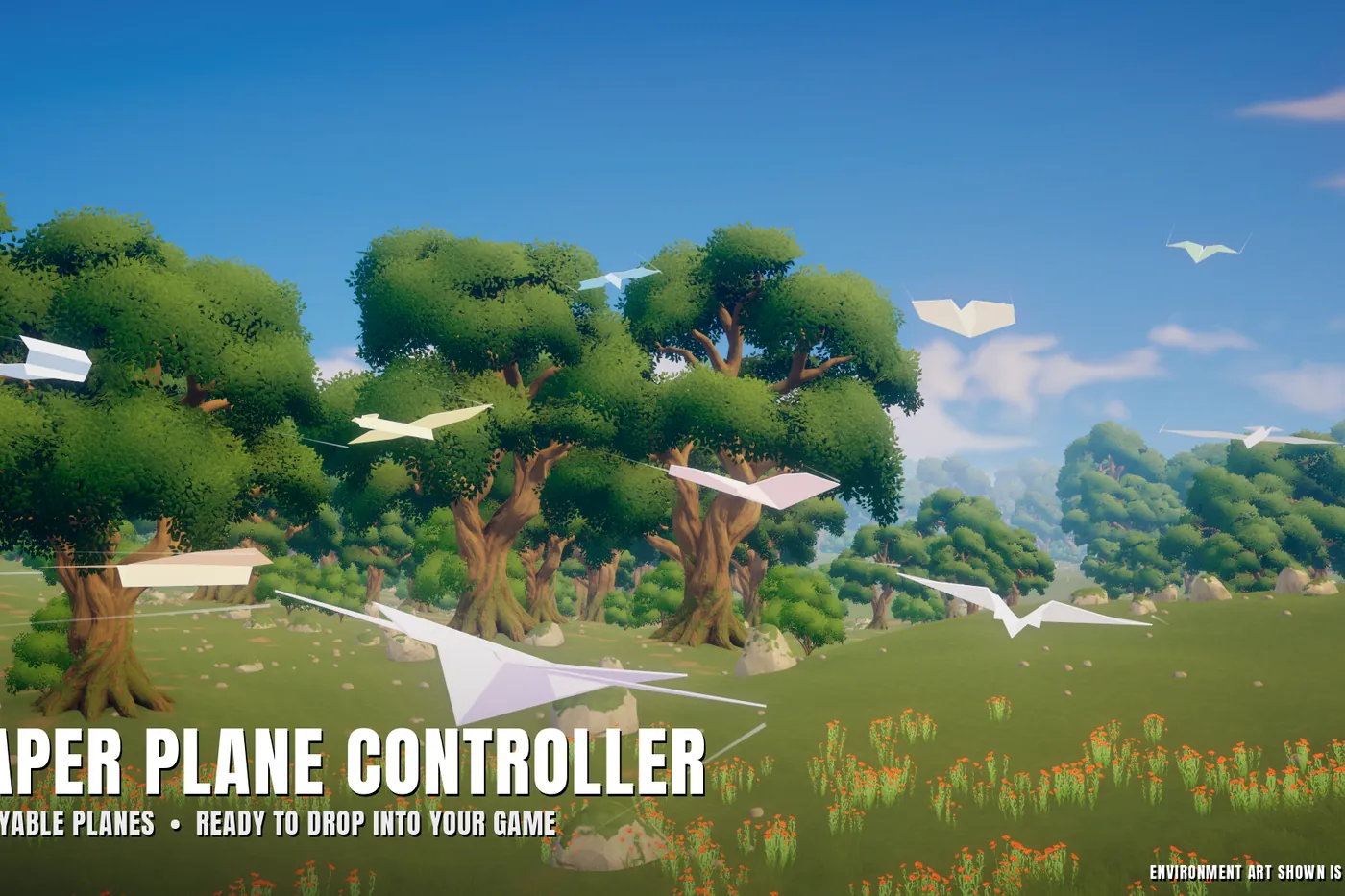
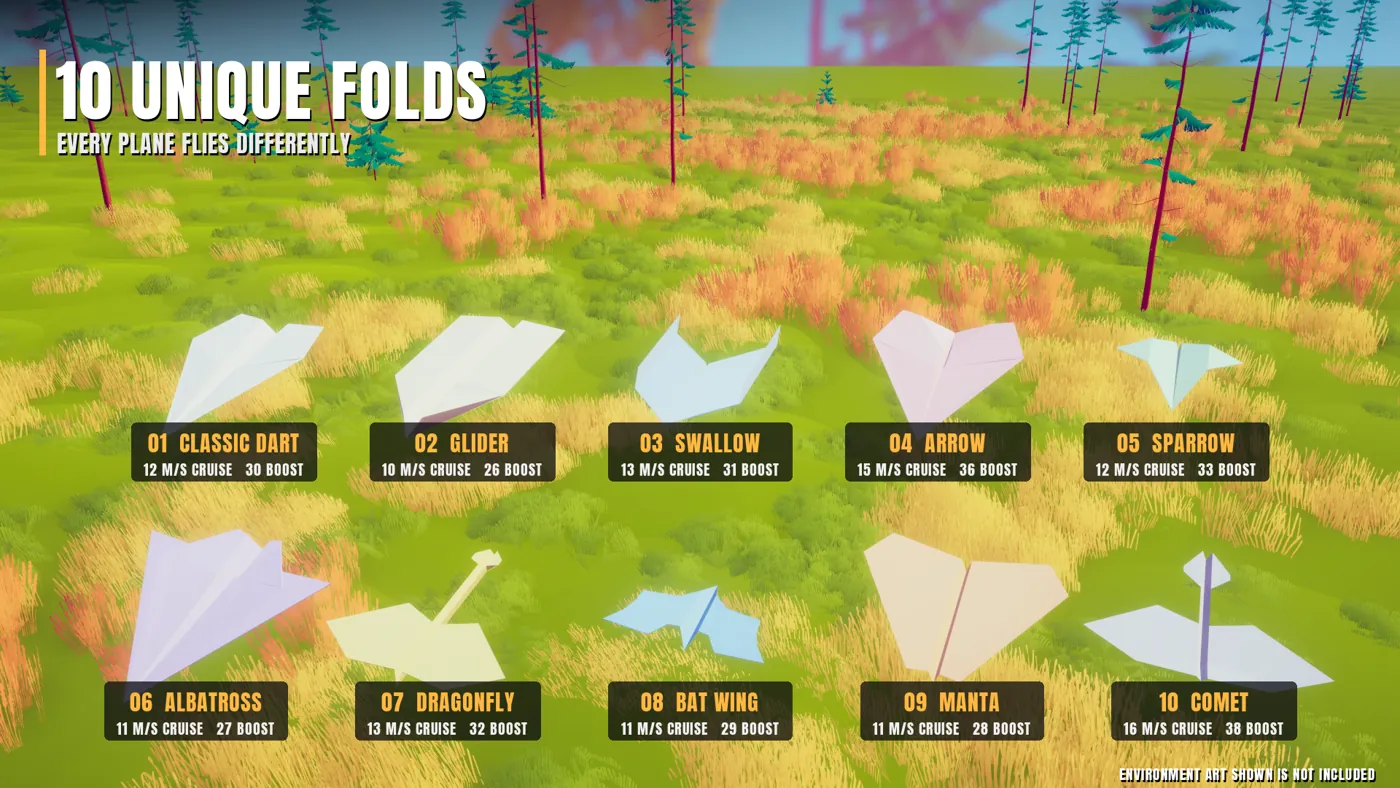
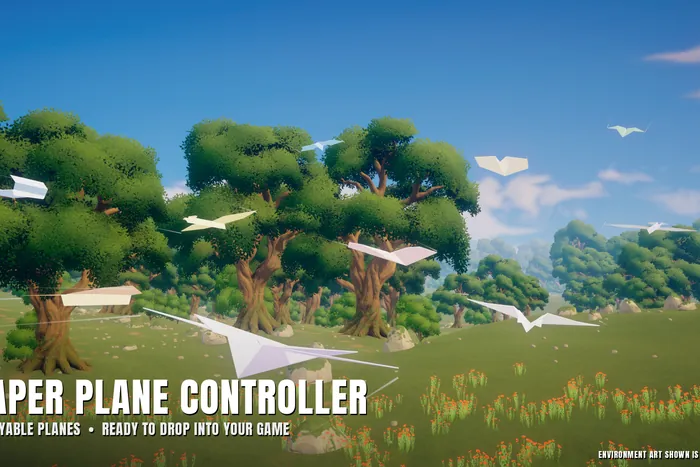
Fab. Epic's marketplace replaced the Unreal Engine Marketplace and also absorbed Sketchfab and others, so the audience leans Unreal but isn't only Unreal. That matters for us. Our Paper Plane Controller is a single Fab listing that ships both an Unreal Engine version and a Unity version; the listing shows both formats. Unity-only assets sell there too, but you're a smaller fish in a mostly-Unreal pond.
itch.io. Indie developers, hobbyists, game jam people, students. Prices skew low, pay-what-you-want is normal, and the community is friendly. Discovery for assets is weaker than on the two big stores, but it's the best place we know for a playable demo. Our Rope Puzzle template has one on itch.io, and people can try the game before buying the template anywhere.
Pricing freedom
This is the difference we underestimated at first.
| Unity Asset Store | Fab | itch.io | |
|---|---|---|---|
| Lowest paid price | $4.99 (or free) | Your choice | Your choice, including pay-what-you-want |
| Highest price | Your choice | Over $1,500 needs Fab support | Your choice |
| Licence tiers | One standard EULA | Personal and Professional tiers, split at $100K revenue | You write your own terms |
| Sales and bundles | Unity-run promotions you can apply for | Store-run sales | Your own sales and bundles any time |
Sources: Unity package docs, Fab licences and pricing, itch.io payments.
Unity's $4.99 floor shapes what you can sell there. Some of our smallest things, like a $1 cartoon trees pack, a $1 voxel guns set and a $3 pixel keyboard, live only on itch.io for exactly that reason. At $1 they're impulse buys. At $4.99 they'd be a harder sell.
Fab's licence tiers are worth understanding before you set a price. Buyers under $100,000 in gross revenue over the last 12 months can buy the Personal tier; bigger studios need Professional. Fab's docs say both grant the same scope of rights. You can price them the same or charge studios more.
Upload effort and review
None of the three is hard, but they're different jobs:
- Unity has the most structure: a package uploaded from the Editor with Asset Store Tools, four key images at exact sizes, and a curation review that can decline you with notes. It's the slowest to get through and the most consistent once you know it. Our Unity publishing guide covers it step by step.
- Fab has its own listing form, media formats and licence-tier pricing. If you're coming from Unity you'll need to re-cut images rather than reuse them as-is, and decide your Personal and Professional prices.
- itch.io goes live when you press publish. You can lay out the page however you like, embed a WebGL demo, add devlogs. The freedom is great, and also means nobody stops you from making a messy page.
How it plays out in our catalogue
Here's where our assets actually are today. We counted from our own collection page:
A few patterns in that list:
- Templates go everywhere. Arrow Escape, Rope Puzzle, Bull Rider and the rest are on all three stores. They're our biggest products, and it makes no sense to hide them from any audience.
- Free VFX packs live on Unity and Fab. That's where engine users browse for effects, and where ratings build social proof for the publisher.
- Tiny packs live on itch.io. Mostly because of the price floor, as above.
- Some things are Fab-first. The Toon VFX Pack and Isometric Buildings are on Fab only right now, and Paper Plane Controller launched there before its Unity listing.
None of the three asked us for exclusivity. Listing everywhere costs extra media work and keeps three support inboxes busy, but it means a change at one store can't sink us.
Payouts and paperwork
All three need tax information before they pay you. Unity pays monthly through PayPal or quarterly by bank transfer (Unity docs). itch.io can pay you directly through your own PayPal or Stripe, or collect and pay out on a schedule, depending on how you set it up. Fab has its own payout setup through Epic. Check the current details on each store's help pages when you set up, because payout methods differ by country and change over time.
So which one?
If we had to pick one store for a Unity-only asset, we'd start on the Unity Asset Store despite the lowest split, because that's where Unity buyers are already looking. Then:
- Add Fab once the Unity listing is stable. More money per sale, a new audience, and if you can make an Unreal version, a much bigger one.
- Add itch.io for demos, small packs, pay-what-you-want experiments and community. Treat it as your playground and your shop window, not your main revenue line.
And keep the name, the screenshots and the description consistent across all three. A buyer who sees the same asset in two places should recognise it instantly. We learned that one the hard way when a template went up under two different names.
 Fab
 Unity · coming soon
 itch.io